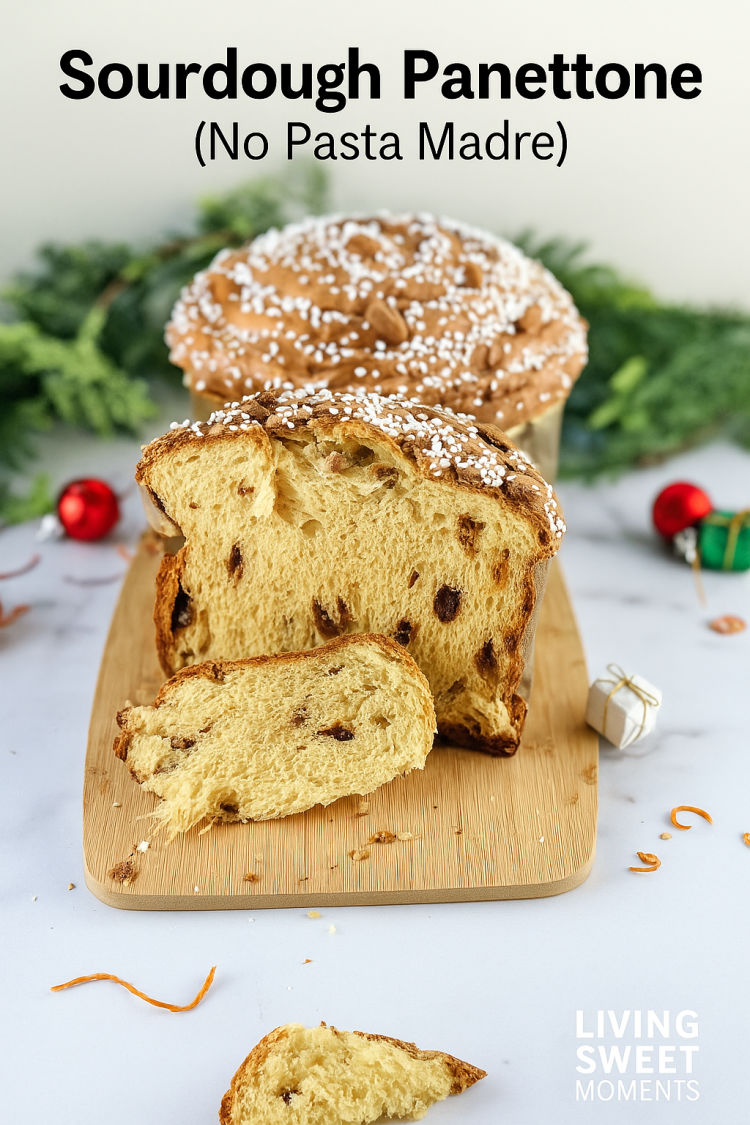
✨ Sourdough Panettone Recipe (Without Pasta Madre!) ✨
❤️ Our Sourdough Journey (Where It All Began)
If someone had told me a few months ago that our bubbly little starter, Betty, would eventually be responsible for a full-blown panettone, I would’ve laughed, closed the fridge, and pretended not to hear it. 😅
But here we are. Living, breathing proof that with enough carbs, curiosity, and caffeine, anything is possible.
This sourdough journey started in the summer as a cute little hobby. A simple loaf here… a baguette there… and suddenly you’re elbow-deep in dough at midnight whispering, “Please behave, Betty. Mommy’s tired.”
We’ve baked:
- Crackly country loaves 🥖
- Crusty baguettes
- Soft, herby, cheesy pull-apart breads
- Cozy honey oat sandwich bread
- Swirly cinnamon breads
- And more sourdough “little snacks” than we can count…
Betty has basically been in training for the bread Olympics this entire time and didn’t even know it. 🏋️♀️
🥇 The Bread Olympics: Enter Panettone
Panettone is the moment.
The diva. The Beyoncé. The tall, dramatic holiday crown jewel of Italian baking. 👑
This isn’t your average bread. If sourdough sandwich bread is a 5K fun run, panettone is the marathon in the Alps wearing golden heels.
But here’s the plot twist: we can absolutely do this. 💪 Every loaf we’ve baked together prepared us for this moment. Once you break the process into steps, panettone stops feeling like a mysterious secret-society ritual and starts feeling like what it really is: a long, buttery, emotional support project.
😂 Panettone Has Personality (And a Little Attitude)
Let’s be honest: panettone is dramatic.
It rises slowly… then suddenly. It builds suspense. It makes you question time, temperature, gluten, and your life choices. Then, when it’s good and ready, it blossoms like it’s auditioning for a baking show finale.
After baking, it has to hang upside down like a little festive acrobat. 🙃 You literally skewer it and hang it between pots or chairs like a bread trapeze artist. Your family will walk by and ask, “Is this… normal?” Your cats will absolutely plot their heist.
Your house will smell like butter, citrus, and Christmas joy, and your kitchen will look like a tiny, slightly chaotic Italian bakery circus. And honestly? I love that for us. 🎪
🎁 Why This Is a Sourdough Panettone Recipe (Without Pasta Madre)
Traditional Italian panettone is made with a stiff sweet starter called pasta madre. Pasta madre is beautiful and historic… and also a tiny diva-child that needs:
- Multiple feedings a day
- Warm baths
- Cloth wrapping
- Temperature control
- And basically its own emotional support plan
We’re not doing that here. 😄
We’re using our regular sourdough starter (Betty!), and guess what? It still gives us:
- A tall, proud rise
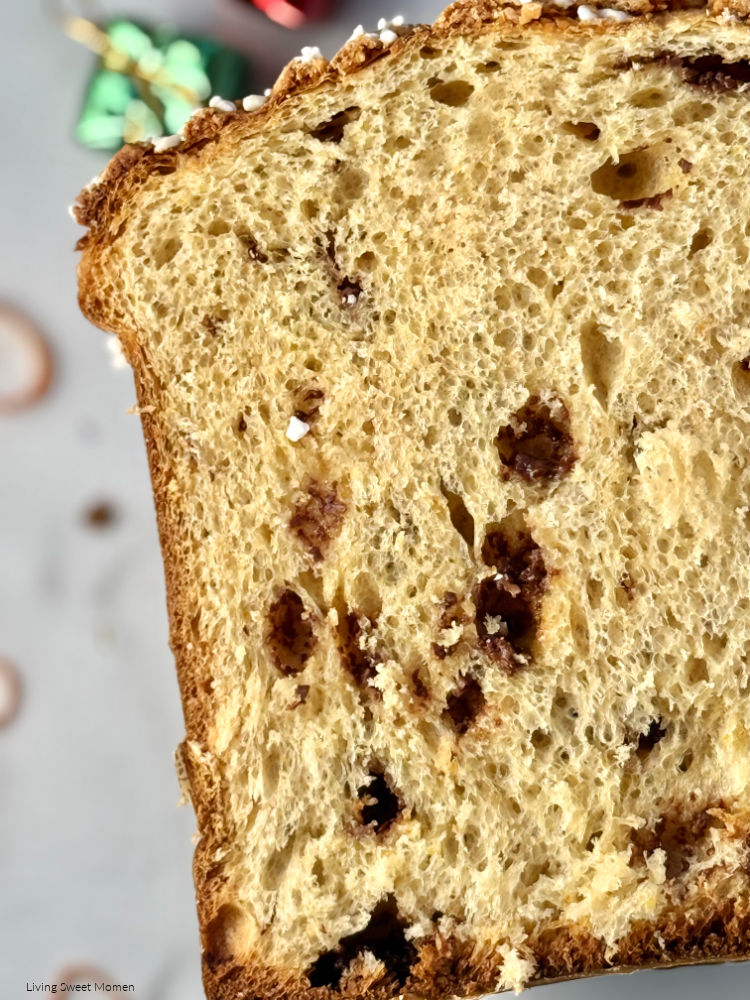
- Long, silky, shreddy crumb
- Buttery, moist interior
- Gorgeous citrus and vanilla aroma
- That bakery-level “wow” factor
Is it 100% traditional? No.
Is it delicious, achievable, and full of soul? YES. 💛
🎄 Store-Bought Panettone vs Homemade Sourdough Panettone
We’ve all seen those boxed panettoni stacked into pyramids every December. Festive boxes, shiny wrapping, cute little strings on top… and then you slice in and it’s:
- Dry
- A little stale
- Weirdly perfumey
- More air than flavor
It tastes like it’s been traveling in Santa’s trunk since last Christmas.
This homemade sourdough panettone is a completely different universe:
- Moist and tender
- Cloud-soft with long, beautiful strands
- Perfumed with real orange, lemon, and vanilla
- Full of melty chocolate or juicy fruit
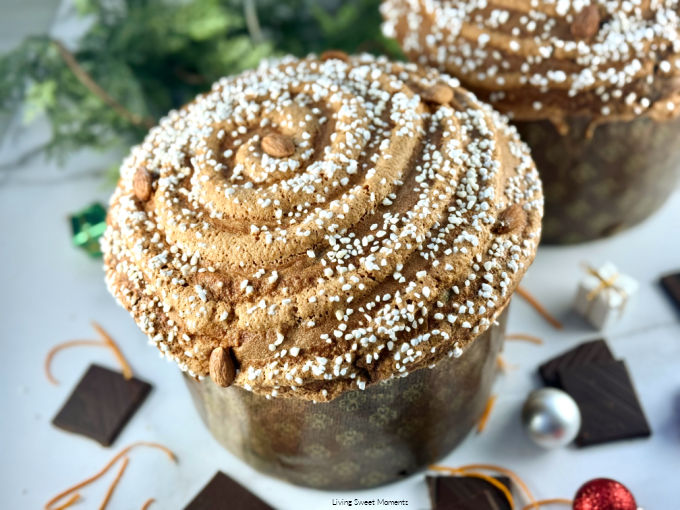
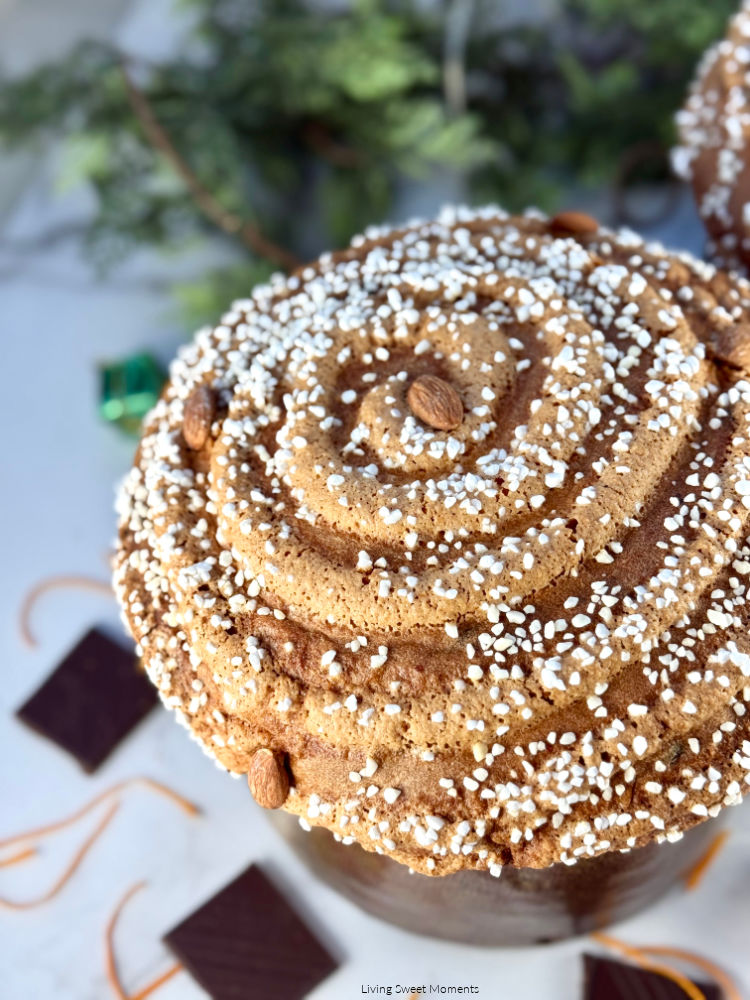
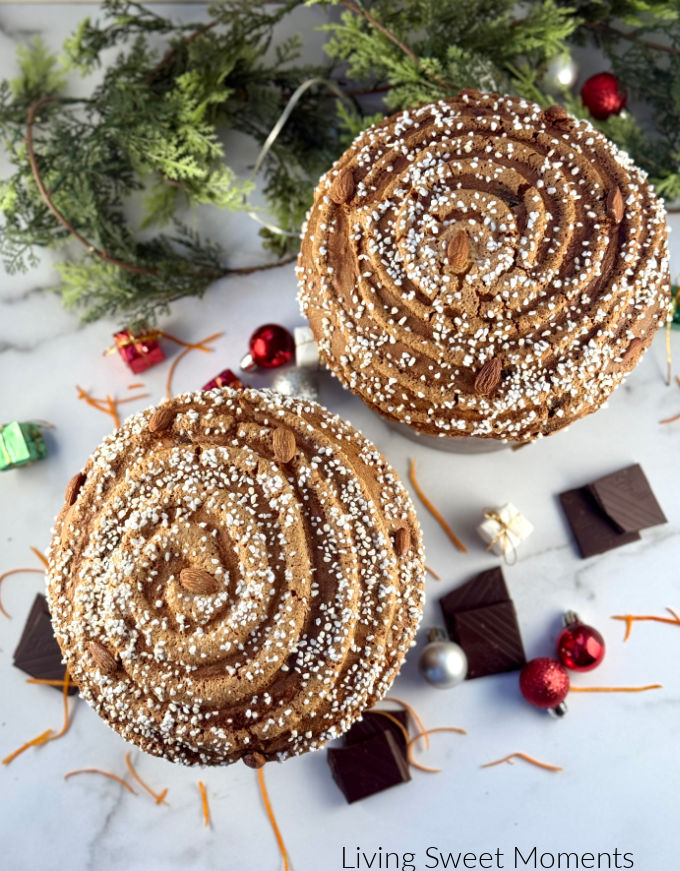
- Topped with a crackly, sweet almond glassa
It’s the kind of panettone that makes you say, “Ohhh. That’s what it was supposed to taste like.”
✨ Holiday Vibes (Why This Bread Just Feels Right Now)
Making panettone during the holidays hits differently.
The kitchen is cozy, citrus zest is flying, butter wrappers are everywhere, and there’s a quiet little happiness in stirring something that takes time. The lights are twinkling, maybe there’s music playing, and your dough is slowly becoming the star of the season.
Even if life outside the kitchen is chaotic (hi, holidays 👋), there’s something grounding and soothing about a long, slow, beautiful bake like this.
🥹 You’re Not Doing This Alone
I wrote this tutorial to be:
- Friendly and warm
- Funny and honest
- Step-by-step, detailed (but not overwhelming)
- Realistic for a home kitchen
Think of this sourdough panettone recipe as coming with a built-in cheerleader. I want you to feel like I’m right there with you, saying:
- “Yes, the dough is supposed to look like that.”
- “Yes, it will rise.”
- “No, the cats may not sample it.”
Okay. Deep breath. Apron on. Let’s do this. 💪✨
The full ingredient list and instructions are at the end of the post!
——————————————————————————————————————————————————
🧰 Tools You’ll Need (Your Panettone Survival Kit)
Making panettone isn’t hard; it just needs the right gear so everything works the way it should. Here’s what to have ready before you dive into the dough:
Essential Tools
- Stand mixer with dough hook – Your BFF for this ultra-enriched dough. Hand-kneading panettone = instant regret.
- Digital kitchen scale – Precision matters! Cups won’t cut it here.
- Instant-read thermometer – To check doneness: 92–94°C (198–201°F).
- Microplane zester – Mandatory for that fragrant citrus paste.
- Two 1 kg panettone paper molds – The classic tall cylinders.
- Long wooden or metal skewers – For hanging your panettone upside down.
- Two tall pots, chairs, or sturdy supports – Your homemade panettone trapeze rig.
(Also known as the Anti-Gravity Cooling System.)
Helpful Extras
- Bench scraper – For shaping super silky dough.
- Dough thermometer – Optional but helpful for enriched dough temps.
- Plastic wrap or shower caps – To cover bowls during rising.
- Silicone spatula – For mixing the almond glassa.
- Cooling rack – After the panettone finishes its acrobatics.
If You Don’t Have Panettone Molds
- A deep, narrow bundt pan works (the crumb won’t stretch as tall but still tasty).
- You can DIY a tall mold using parchment + a deep pot, but the classic paper molds make life much easier.
🍋 Step-by-Step Tutorial: How to Make Sourdough Panettone (With Love, Humor & a Little Chaos)
🥣 Step 1: The First Dough (Night Before — “See You in the Morning”)
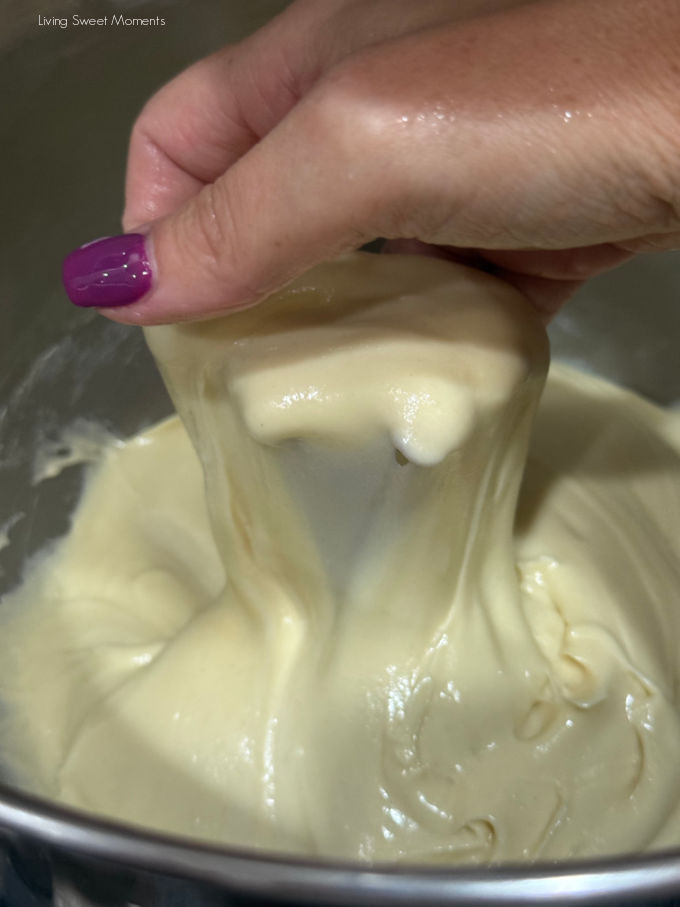
This is the dough that does most of the heavy lifting. We want it silky, elastic, and strong enough to climb the panettone mold like it owns the place.
What you’ll do:
- Mix active sourdough starter, egg yolks, sugar, and water.
- Add flour and mix until it comes together.
- Add softened butter slowly, a little at a time.
- Knead in the mixer until the dough becomes smooth, shiny, and passes a tight windowpane test.
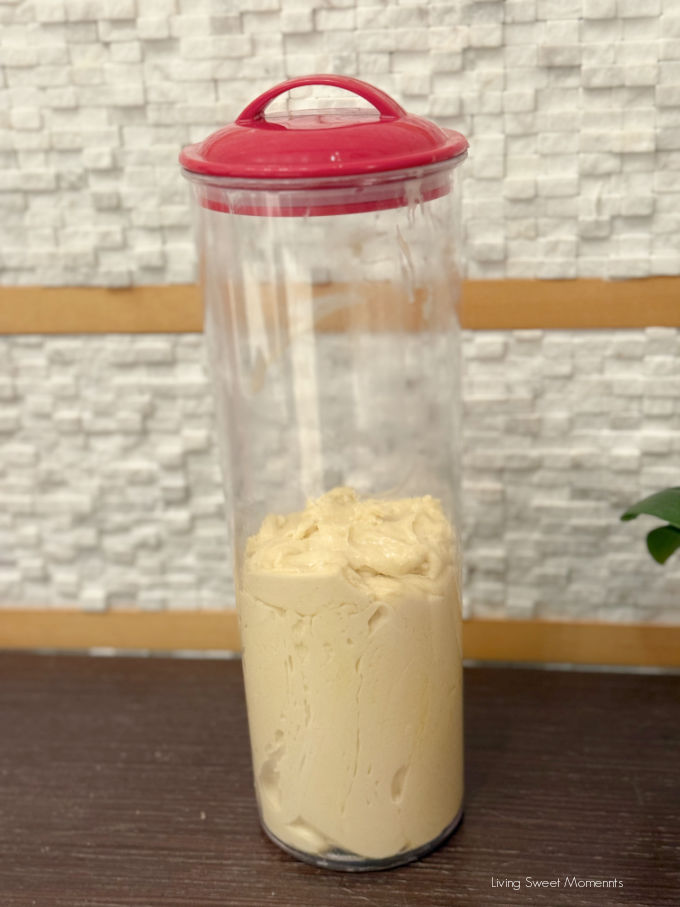
This is how it starts
When you poke it, it should bounce back like a well-moisturized cheek. 🧴
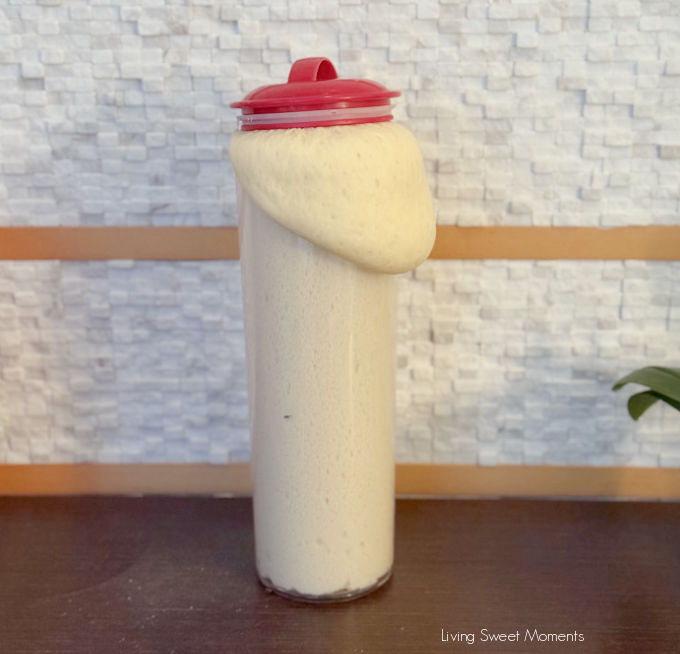
Place it in a tall, lightly oiled container, cover, and let it rise overnight at a cozy temperature. It should triple in volume by morning. Yes, you will check on it at 1 a.m. like a worried parent. That’s part of the experience.
🍊 Step 2: The Aromatic Citrus Paste (“Flavor Bomb Time”)
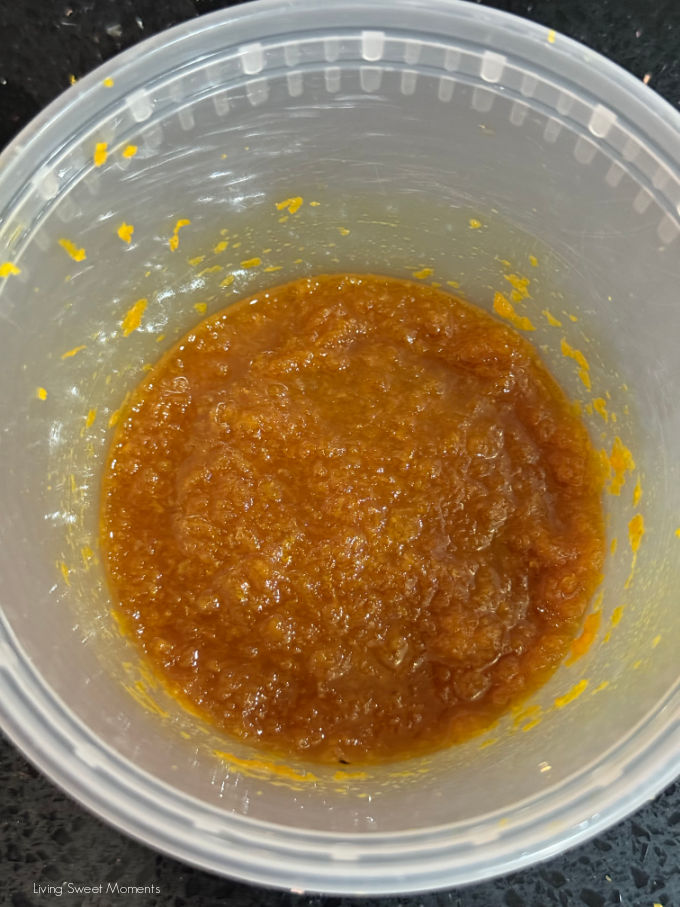
This tiny bowl of goodness carries a shocking amount of flavor. It’s what makes your panettone smell like a legit Italian bakery. 🍊
What goes in: orange zest, lemon zest, honey, sugar, vanilla bean (or extract), and optional orange blossom water.
What you’ll do:
- Zest directly over the bowl so the oils fall in.
- Add honey, sugar, and vanilla.
- Mash everything together with the back of a spoon until it becomes a glossy, sticky paste.
- Let it rest for about 30 minutes so the citrus oils bloom.
The smell alone may cause you to forgive people who don’t deserve it. It’s that good. 💛
🧈 Step 3: The Second Dough (“Gym Time for Your Mixer”)

This is where your mixer earns its entire existence.
What you’ll do:
- Add the entire first dough to the mixer bowl.
- Add flour, sugar, honey, egg yolks, and the citrus paste.
- Mix until smooth and elastic.
- Add butter slowly again, in small pieces.
- Knead until the dough is super strong and passes a beautiful windowpane test.
There will be a moment when it looks greasy, broken, and terrible. This is the “ugly phase.” Keep going. Enriched dough always goes through it, like gluten puberty. It will emulsify; trust the process. 💪
🍫 Step 4: Add the Inclusions (“Personality Time”)

Now your dough gets to express itself. This sourdough panettone recipe features a citrus and chocolate combination, but you can also opt for a traditional or wild approach.
Ideas:
- Chopped dark chocolate (55–65%) 🍫
- Raisins, soaked and drained
- Candied orange peel
- Dried cranberries
How to add them:
- Set your mixer to low speed.
- Add the inclusions in small batches.
- Mix only until they are evenly distributed (30–60 seconds).
Panettone dough is delicate, so the amount of fruit/chocolate you add matters. As a general guideline, aim for 25–35% inclusions relative to dough weight.
For this recipe (approx. 1.2–1.3kg total dough), that’s usually, per panettone:
-
300–400 g total inclusions (raisins + candied fruit/chocolate/nuts)
-
Hydrated raisins work beautifully and give great distribution
-
If adding chocolate, reduce inclusions slightly so the dough doesn’t tear
Feel free to adjust within that range depending on how fruit-forward you like your panettone. Heavy inclusions result in richer slices, but a more delicate dough; lighter inclusions yield a taller, airier crumb.
No stretch-and-fold gymnastics here; the dough is too rich for that. We’re gentle and efficient.
🛏️ Step 5: Bench Rest + Shape (“Little Dough Spa”)

Let the dough sit and relax for about 30 minutes. It’s had a big day. So have you.
It’ll become softer and even more silky. Then:
- Turn it out onto a lightly buttered surface.
- Shape into a tight, smooth ball.
- Place it gently into your panettone mold (about ¾ full).
If it looks like a shiny, plump, golden baby bump, you did it right. 🥹
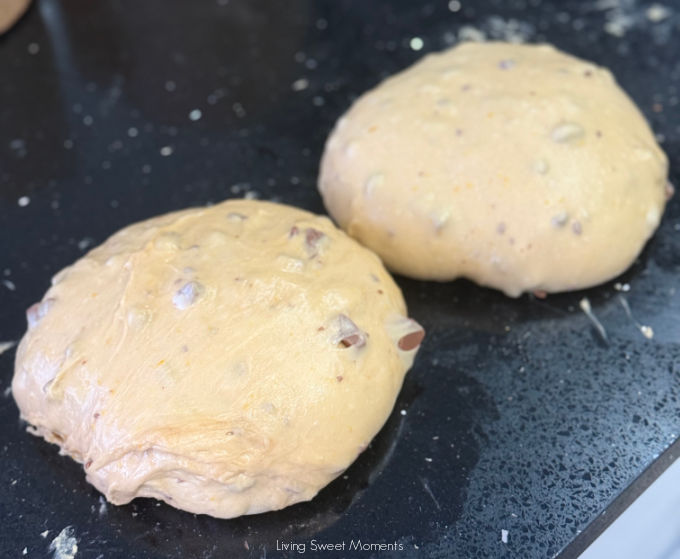
We shape and place it on the paper mold
🌞 Step 6: Final Proof (“The Longest Relationship Test of Your Life”)
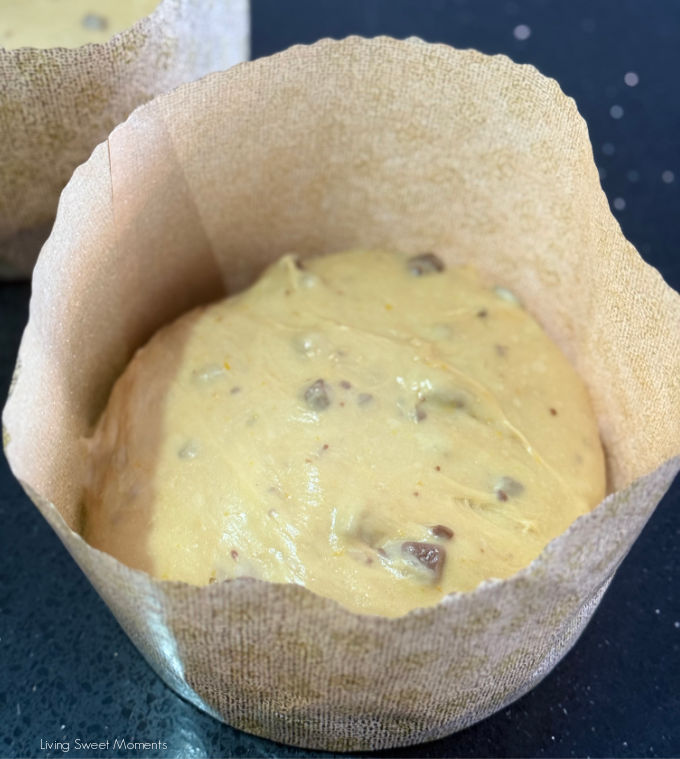
This is where patience meets faith. Final proof typically takes 7-9 hours in a warm spot.
You will:
- Stare at it.
- Take photos of it.
- Check it every 20–30 minutes.
- Whisper, “Come on, baby, reach the rim for me.”
It’s ready when the dough has risen to just about the rim of the mold and looks puffed, smooth, and jiggly when you nudge it. Do not bake by the clock. Bake by the volume. ⏳

This dough yields enough for two 750g panettone molds or can be baked in two 1kg molds if you prefer extra space for rise/loft. Using 750g molds will give a fuller visual, while 1kg molds leave more room for oven spring and a taller dome. Both work; it’s just a matter of presentation preference!
🌰 Step 7: Make the Almond Glassa (“Crown Your Queen”)

The glassa is the crispy, sweet almond topping that makes your panettone look and taste like it came from a fancy Italian pastry shop. 💅
What you’ll do:
- Mix almond flour, powdered sugar, and cornstarch.
- Whisk egg white lightly and add to the dry mix.
- Stir until it becomes a thick, smooth, pipeable paste.
- Optional: add a drop of almond extract or a little cocoa powder for color.
Once your dough is fully proofed and at the rim, gently spread or pipe a thin layer of glassa on top. Sprinkle with a few whole almonds and pearl sugar for that bakery look.
🔥 Step 8: Bake (“Your House Smells Like Heaven Now”)

Ready to bake!
Bake your panettone at 170°C / 340°F. Your entire home will smell like citrus, vanilla, butter, and happiness.
It’s done when:
- The top is deeply golden and crackled.
- A skewer inserted in the center comes out clean.
- The internal temperature is around 92–94°C / 198–201°F.
If it starts browning too quickly, tent it loosely with foil.
Try not to scream with joy when you open the oven. Or do. I support that. 🙌
🙃 Step 9: Hang Upside Down (“Panettone Acrobatics Hour”)
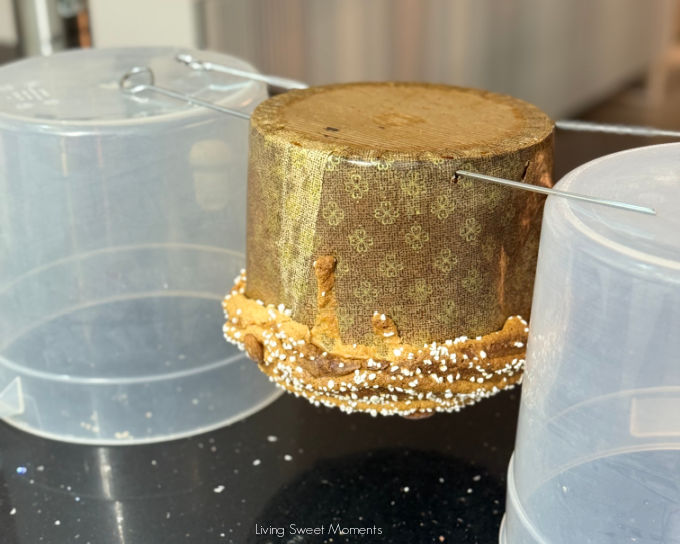
This is the part where your kitchen turns into a bread circus.
As soon as it comes out of the oven:
- Pierce the base of the panettone (through the paper mold) with two skewers.
- Hang it upside down between two tall pots, chairs, or sturdy supports.
- Make sure it hangs freely and doesn’t touch any surfaces.
Why upside down? Because the crumb is so soft and moist that if it cools upright, gravity will squash all that gorgeous structure. Hanging preserves the height and the silky strands.
Your cats will walk by like, “What in the holy gluten is that?” Ignore them. Protect the bread. 😹
🎉 Step 10: Slice & Celebrate (“We Did It!”)
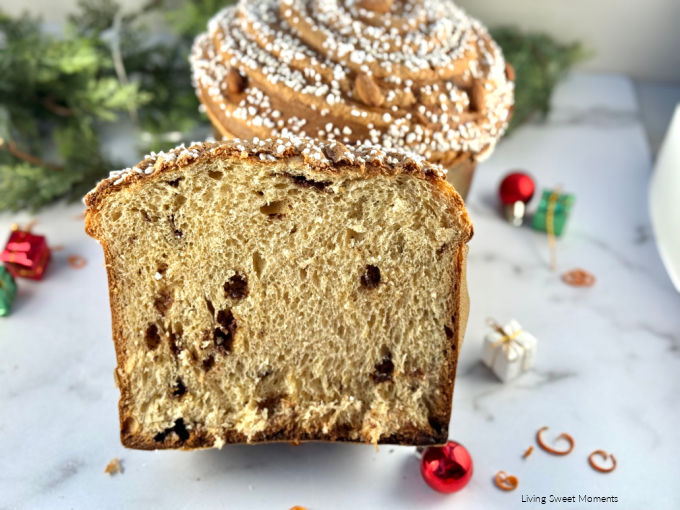
After 8–10 hours of cooling upside down (usually overnight), gently take down your panettone, remove the skewers, and slice into it.
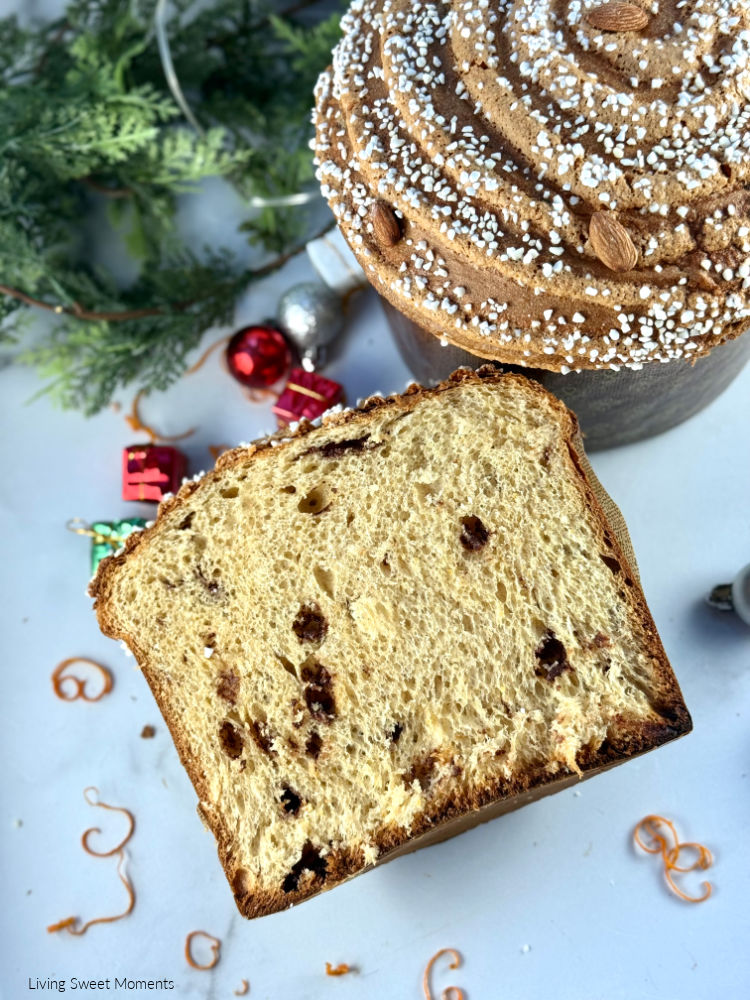
The crumb should:
- Stretch into long golden strands
- Smells like citrus, vanilla, and butter
- Feel moist, soft, and cloud-like
Afterwards, take a bite. Close your eyes. Enjoy the moment.
You just made a real sourdough panettone from scratch. 🥹💛
🥘 Ingredient Overview (In Plain English)
Here’s what each ingredient does in this sourdough panettone recipe:
- Bread Flour (Caputo Red, Manitoba, strong bread flour) – Provides strength and structure so your panettone can rise tall and shred in long strands.
- Egg Yolks – Add richness, color, and that luxurious, silky crumb.
- Butter – Moisture, softness, flavor, and that melt-in-your-mouth feel.
- Sugar + Honey – Sweetness, caramelization, and longer-lasting softness.
- Sourdough Starter – Our natural leavening. Adds depth, character, and structure without pasta madre.
- Aromatic Citrus Paste – Real orange and lemon zest with honey, sugar, and vanilla for an authentic Italian bakery aroma.
- Chocolate or Fruit Inclusions – Custom flavor and texture: melty chocolate pockets or juicy fruit bits.
- Almond Glassa – Thin, crisp, nutty shell on top that makes your panettone look and taste bakery-perfect.
🕓 Panettone Timeline (No-Panic Version)
| Time | Step | What’s Happening |
|---|---|---|
| 8:00 pm (Night Before) | First Dough | Mix and knead the first dough until silky and elastic. Place in a tall container to rise. |
| Overnight | Fermentation | Dough ferments and rises until tripled in volume in a warm-ish spot. |
| 6:00 am | Check Dough | If tripled and domed, you’re ready. If it rose too fast, chill briefly in the fridge. |
| 6:30 am | Citrus Paste | Make the aromatic citrus paste and let it rest so the oils bloom. |
| 7:00 am | Second Dough | Mix the first dough with flour, sugar, yolks, honey, and citrus paste. Add butter slowly and knead until strong and glossy. |
| 8:00 am | Add-Ins & Rest | Add chocolate/fruit inclusions, then let the dough rest for about 30 minutes. |
| 8:30 am | Shape | Shape into tight rounds and place into panettone molds (about ¾ full). |
| 9:00 am – 3:00 pm | Final Proof | Proof in a warm spot until the dough rises to the rim of the mold. |
| 4:00 pm | Bake | Apply almond glassa and bake until golden, crackled, and fully cooked (198–201°F in the center). |
| 5:00 pm | Hang | Skewer and hang panettoni upside down to cool completely. |
| Next Morning | Slice & Enjoy | Slice, admire the crumb, and enjoy with coffee. ☕️ |
⭐ Variations (Make It Your Own!)
Once you’ve conquered the base sourdough panettone recipe, you can have fun with a few favorite variations:
✨ Our Signature Citrus–Chocolate Panettone
Use the aromatic citrus paste + chopped dark chocolate (and optional dried cranberries). Elegant, festive, and slightly addictive.
✨ Classic Fruit (Milanese Style)
Swap the chocolate for raisins (soaked and drained) and candied orange peel. This is the traditional flavor most people recognize as “real panettone.”
✨ Chocolate Lovers’ Panettone
Add cocoa powder to the second dough and fold in extra chocolate chunks. It’s like a chocolate cloud dressed up as panettone. 🍫
✨ Filled Panettone (Pistachio, Dulce de Leche, or Nutella)
Once your panettone has baked, cooled, and rested:
- Fill a piping bag with pistachio cream, dulce de leche, or Nutella.
- Use a long piping tip to inject filling into 3–4 spots around the top.
- Each slice reveals pockets of creamy, rich goodness. Pure holiday luxury. 💚
❓ Panettone FAQ
Can I make this over two days instead of one long day?
Yes! That’s actually how this schedule is designed. First dough at night, second dough + shaping in the morning, proof and bake in the afternoon, hang overnight, slice the next day.
Why do I have to hang the panettone upside down?
Because the crumb is so soft and enriched that if it cools upright, gravity will compress it, and you’ll lose that tall, airy structure. Hanging lets it set in place while staying fluffy.
Does sourdough make the panettone sour?
Nope. Because the dough is so enriched with butter, eggs, sugar, and honey, the flavor is sweet, milky, and gently aromatic—not tangy.
Can I freeze panettone?
Yes! Slice it, wrap slices tightly in plastic wrap, and then in a freezer bag. Freeze up to 3 months. Warm in a low oven for 5–7 minutes before serving.
Can I skip the almond glassa topping?
You can. Instead, you can score an X on top and add a small cube of butter before baking. But the glassa adds an amazing crunch and bakery look, so I highly recommend it. 😉
Can I bake this in a bundt or regular pan?
You can bake it in a well-greased bundt pan for a “panettone-inspired” cake. It won’t be as tall as a classic paper mold, but it will still be delicious.
How long does homemade panettone stay soft?
Wrapped tightly, it stays soft for about 5–7 days thanks to the butter, honey, and yolks. The flavor is often even better on day 2.
What if my dough never reaches the rim?
Check the temperature; it may be too cold. Warm it gently and give it more time. Sourdough panettone runs on its own schedule. If it’s very slow, it may be a starter-strength issue; next time, give your starter extra feeds before baking day.
🛠️ Troubleshooting (Because Panettone Has Attitude)
“My first dough didn’t triple overnight!”
Your kitchen was probably too cool. Move the dough somewhere warmer (around 78–82°F) and give it more time. Sourdough runs on vibes and temperature, not the clock.
“It tripled too fast while I was sleeping!”
Classic panettone drama. If it’s fully risen and you’re not ready for the next step, tuck it into the fridge for 3–5 hours to slow it down. Let it warm slightly before mixing the second dough.
“My dough looks greasy and broken!”
Don’t panic. Enriched dough almost always has an ugly stage. Keep mixing. The butter will eventually emulsify, and the dough will turn smooth and shiny again.
“All the chocolate/fruit sank to the bottom.”
Next time, toss inclusions in a little flour before adding, and make sure your dough is fully strengthened (good gluten development) before adding them.
“It’s been 7 hours and it still hasn’t reached the rim!”
Check your temperature; anything under 76°F will significantly slow the rise. Warm the environment and give it more time. Panettone does not rush for anyone. ⏳
“My panettone collapsed after baking.”
Usually one of two things:
- It was underbaked (internal temp too low), or
- It wasn’t hung upside down soon enough after baking.
Next time, bake to 198–201°F in the center and hang immediately.
“My cat is obsessed with the hanging panettone.”
Hang it inside a tall stockpot or between heavy pots so paws can’t reach it. Protect the panettone. Save the bread. 😹
🎄 Closing Thoughts (A Holiday Baking Love Letter)
If you’ve made it this far, through the mixing, kneading, rising, proofing, glassa-ing, baking, and the full-on upside-down acrobatics, then let me say this clearly:
I am SO proud of you. 💛
You just tackled one of the most dramatic, high-maintenance breads on the planet. You mixed, watched, waited, worried a little, trusted a lot, and turned simple ingredients into something tall, golden, and magical.
When you slice into your panettone and see those long, silky golden strands stretching apart, I hope you feel that mix of joy, disbelief, and holiday magic I felt, too, because this bread isn’t just bread.
It’s patience.
It’s a celebration.
It’s the smell of citrus and butter filling your home.
It’s a warm, cozy hug in loaf form. 🤍
Whether you gift it, share it at your holiday table, or hide in a quiet corner and eat it slice by slice with a cup of coffee (no judgment), enjoy every bite. You earned this one.
And remember: if you can bake a sourdough panettone… You can bake anything. ✨
Happy holidays, happy baking, and give Betty a little extra feed for me. 🎄💫
Sourdough Panettone with Almond Glassa & Chef’s Citrus Paste
Ingredients
First Dough (Day 1 – Evening)
- 160 g active sourdough starter 100% hydration
- 400 g strong bread flour Caputo Red works great
- 160 g water room temperature
- 100 g granulated sugar
- 4 egg yolks ≈ 80 g
- 120 g unsalted butter softened
Chef’s Aromatic Citrus Paste
- Zest of 2 large oranges
- Zest of 1 lemon
- 20 g honey 1 Tbsp
- 10 g sugar 2 tsp
- Seeds from 1 vanilla bean or 1 tsp vanilla extract
- Optional: 1 tsp orange blossom water
Second Dough (Day 2 – Morning)
- All of the first dough
- 200 g bread flour
- 60 g granulated sugar
- 40 g honey
- 4 egg yolks ≈ 80 g
- 80 g unsalted butter softened
- 6 g fine salt
- All of the aromatic citrus paste
Inclusions
- 200 g dark chocolate chunks
- dried fruits, raisins, etc optional
Almond Glassa
- 100 g almond flour or hazelnut flour
- 120 g powdered sugar
- 20 g cornstarch or potato starch
- 80 g egg white ≈ 2 egg whites
Toppings
- Whole Almonds
- Pearl Sugar
Instructions
Citrus Paste
- Microplane all zest directly over the bowl to capture aromatic oils.
- Add honey, sugar, vanilla, and optional orange blossom water.
- Mash into a glossy, fragrant paste.
- Cover and rest 30 minutes to let the citrus oils bloom.
First Dough (Day 1 – Evening)
- Combine starter, water, sugar, and egg yolks in a mixer bowl.
- Add the flour and mix until a rough dough forms.
- Add softened butter in 3 additions, mixing fully each time.
- Knead 15–20 minutes until dough becomes smooth, shiny, and elastic.
- Place dough in a buttered bowl, cover, and ferment overnight at 26–28°C (78–82°F) until tripled in size (8–10 hours).
Second Dough (Day 2 – Morning)
- Add the fermented first dough, flour, sugar, honey, egg yolks, and citrus paste to the mixer.
- Mix until gluten redevelops and the dough feels stronger.
- Add the salt and mix 1–2 minutes.
- Add softened butter gradually until fully emulsified.
- Knead to a strong, thin windowpane.
- Add inclusions on low speed in 2–3 batches (30–60 seconds).
- Rest dough 30 minutes on the counter.
- Divide dough into 2 equal portions.
- Shape each into a tight round.
- Place into two 1 kg panettone molds (about ¾ full).
- Proof at 28°C (82°F) until dough reaches the rim (5–7 hours).
Almond Glassa
- Lightly whisk the egg white.
- Add almond flour, powdered sugar, and cornstarch.
- Mix into a thick, smooth paste.
- Optional: add almond extract or cocoa powder.
- Cover until ready to use.
Bake
- Preheat oven to 170°C (340°F).
- Spread or pipe glassa on top of each fully proofed dough.
- Sprinkle with whole almonds and pearl sugar.
- Bake 45–50 minutes until internal temperature is 92–94°C (198–201°F).
- Tent with foil if browning too quickly.
Cooling
- mmediately pierce each loaf through the lower sides with 2 long skewers.
- Hang upside down between tall pots or supports.
- Cool 8–10 hours until completely set.
- Slice only after resting 12 hours.
Storage
- Wrap tightly in plastic wrap or cellophane.
- Store at room temperature 5–7 days.
- Flavor improves after the first 12 hours.
Notes
- • Feed your starter 2–3 times before beginning for maximum strength.
• Maintain warm temps (78–82°F) for the best rise. - Toss inclusions in a little flour to prevent sinking.
• A strong windowpane is essential for a tall, shreddy crumb.
• Do not skip the upside-down hanging step, it prevents collapse. - Aim for a total of 300-400 grams of inclusions per panettone


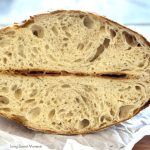



Definitely one of the panettone recipes out there that I like best. It’s a good combination of “authentic and traditional” (i.e., based on sourdough, no yeast), and “pragmatic” (i.e. a no-cook flavor paste, no exotic oils that need to be procured, and the use of a regular 100% hydration starter).
This wasn’t my first attempt at making Panettone, so I had already figured out some of the dos and don’ts – but anyway, the result was delicious.
Improvement opportunity: be a bit more specific about the total quantity of inclusions that the dough can take/that is reasonable. Also, I feel this quantity of dough is a bit too small for filling two 1kg molds, even if the dough rises nicely. 750g molds is more like it.
Hi Alex!
Thank you so much for taking the time to leave such a thoughtful comment, it truly made my day. 😊 I’m so happy to hear that you enjoyed the recipe and that the balance of traditional sourdough elements with a more approachable method worked well for you. Panettone can be such a labor of love, so your feedback means a lot!
And thank you as well for your suggestions, they are very appreciated. You’re absolutely right that inclusion amounts can vary depending on preference and dough strength, and I’ll update the post to be more specific so readers have clearer guidance. Regarding the molds, great point! I tested using two 1kg molds because it allows room for a tall rise, but the dough quantity does indeed sit more comfortably in 750g molds. I’ll make a note of that in the recipe for clarity.
So glad your bake turned out delicious . If you ever try it again with different inclusions or hydration tweaks, please come back and tell me! Happy baking, and thank you again for being part of this sourdough journey with me. 🙌✨